
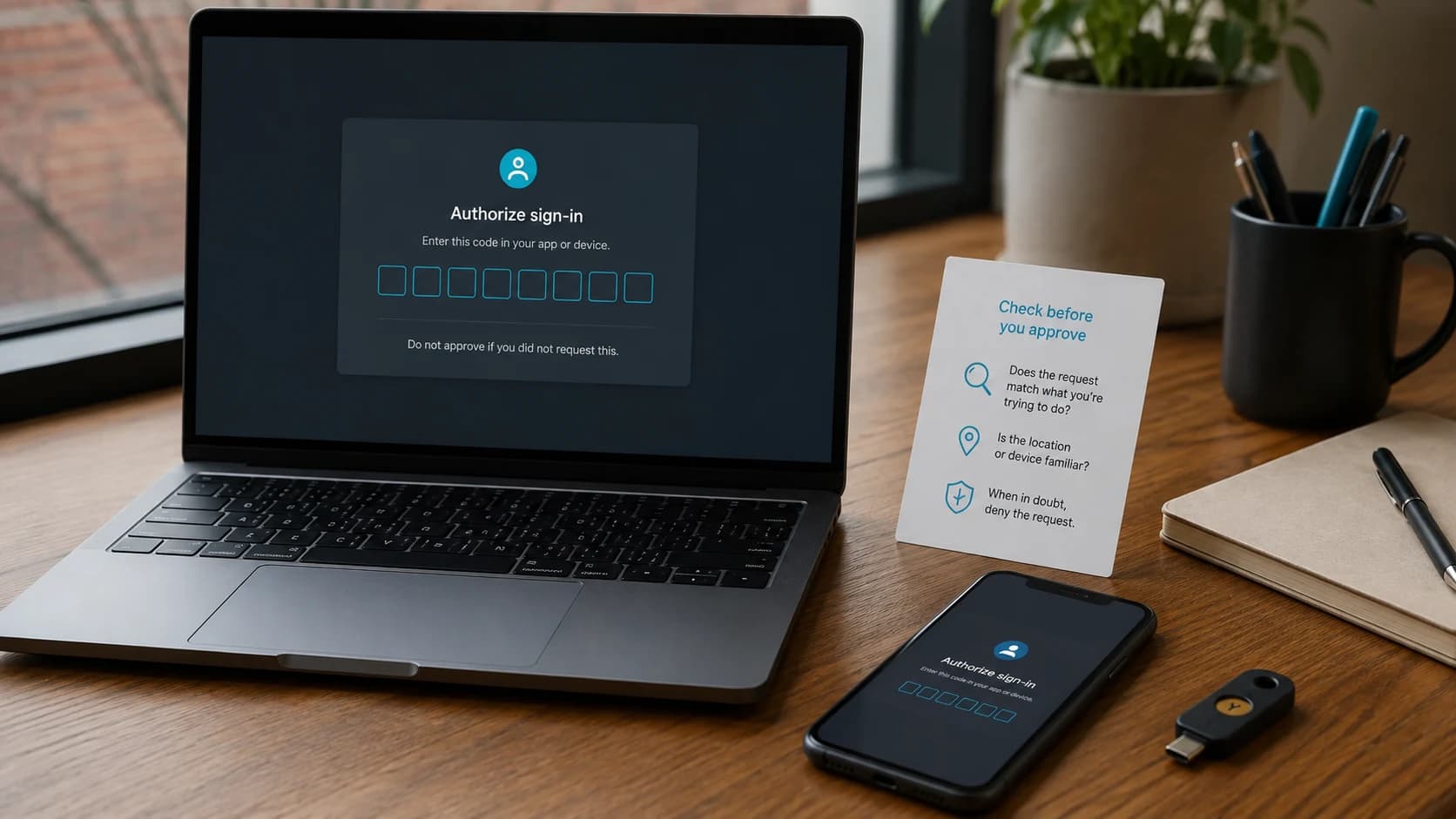
AI-Enabled Device Code Phishing: Defensive Priorities
Device code phishing succeeds by placing an attacker between a user and a legitimate authentication workflow. The victim may visit a genuine Microsoft sign-in page and complete MFA, but the code being approved belongs to the attacker's session.
In April 2026, Microsoft described a campaign that combined automated infrastructure, dynamically generated device codes, tailored lures, and post-compromise token abuse. The defensive lesson is direct: a familiar domain and a successful MFA prompt do not establish that the sign-in request is legitimate.
Why automation changes the scale, not the trust problem
Dynamic code generation can keep a lure usable when the victim engages, while automated polling immediately detects a successful authorization. Stolen tokens can then support email collection, directory reconnaissance, and persistence through inbox rules or additional device registration.
Generative tools may improve the relevance of lures, but the core control failure remains authorization without verified context. Organizations should decide whether device code flow is required at all and restrict it when the business case is absent.
- Block or narrowly scope device code authentication where possible.
- Restrict who may enroll devices and which platforms are permitted.
- Detect new device registration near unusual token or mailbox activity.
- Teach users to reject unsolicited codes even on legitimate sign-in pages.
Contain the token, account, and persistence
If a user entered an unsolicited code, revoke active sessions and refresh tokens, review device registrations, remove unauthorized inbox rules and OAuth grants, reset credentials when appropriate, and inspect Graph and mailbox activity. A password change alone may leave a valid token or attacker-created persistence in place.
Scope laterally by reviewing messages sent from the account, because a compromised mailbox can distribute convincing internal lures. Preserve identity and audit logs before retention windows or response actions remove useful evidence.
Put the lesson into practice
- Document every legitimate use of device code flow.
- Block the flow by default and approve narrow exceptions.
- Alert on abnormal token, device, OAuth, and mailbox events.
- Create a token-theft playbook that goes beyond password reset.
- Run a role-specific exercise for help-desk and high-value users.
Related Outfaze guidance
- Managed multi-factor authentication
- Cloud security monitoring
- Email security
- Managed detection and response
- Security awareness training