
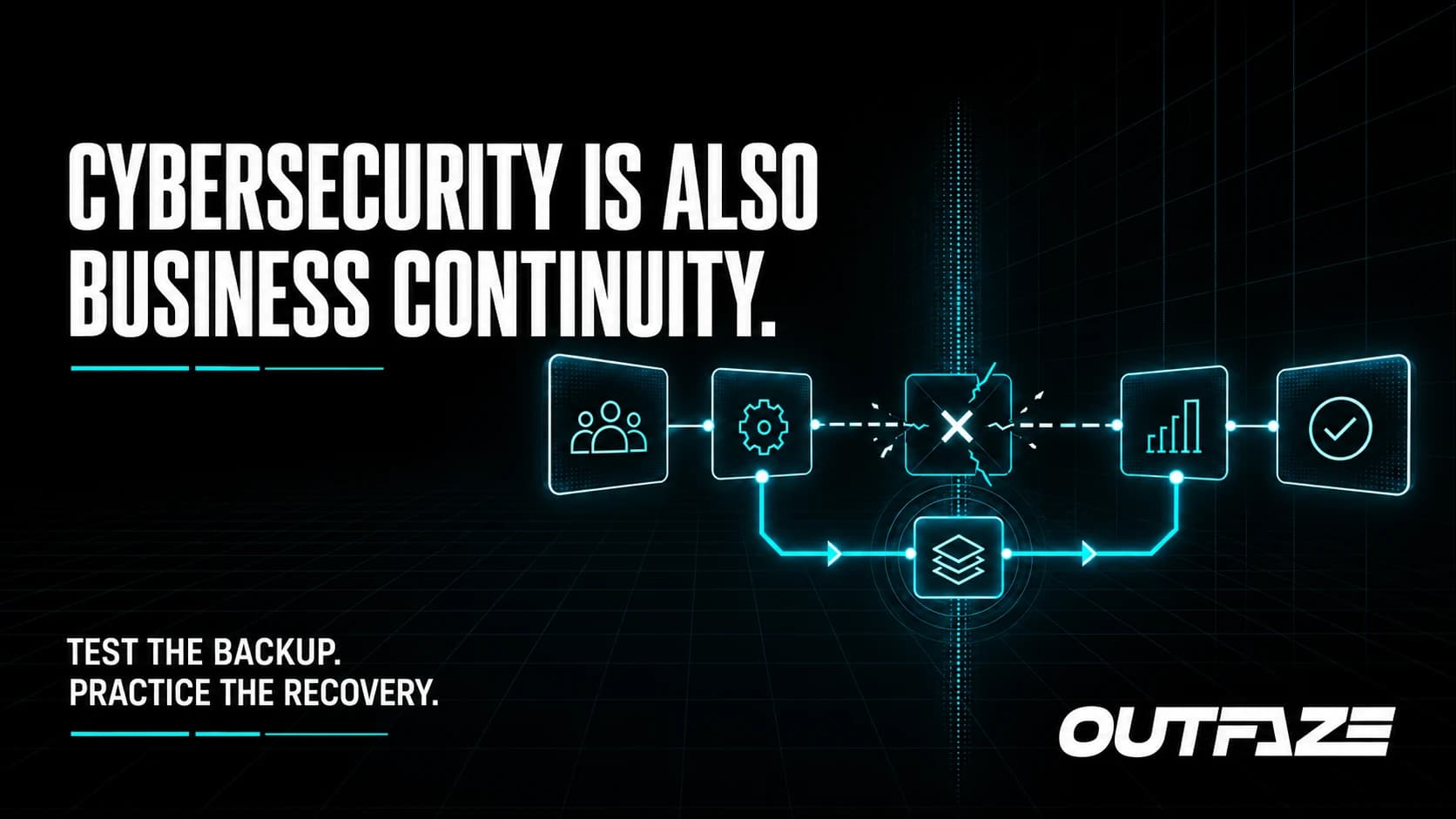
A Cyberattack Can Stop Operations Without Stealing Data
A cyber incident does not need to involve confirmed data theft to cause serious business damage. If essential systems become unavailable, manufacturing can stop, orders can stall, and customers can be left waiting.
Boston Scientific's August 2026 incident is a useful reminder. The company disclosed that unauthorized activity caused a network outage and affected its ability to manufacture products, process orders, and ship them. Its September 8 SEC filing said the incident was expected to have a material effect on third-quarter and full-year results.
On September 9, Boston Scientific said manufacturing, order fulfilment, and shipping had been fully restored. It also said third-party assessments had found no evidence of an ongoing threat or compromise to the systems and product technologies listed in its update.
The point is not to speculate about an incident we did not investigate. It is to learn from the operational effect that the company publicly described.
Availability is a security issue
Cybersecurity conversations often focus on stolen records. Confidentiality matters, but so do availability and integrity.
For a small or mid-sized business, an outage can interrupt:
- production and warehouse activity;
- scheduling, billing, and order processing;
- customer support and communications;
- access to suppliers and logistics partners;
- payroll and other essential administration; and
- the recovery tools needed to restore normal operations.
When systems are deeply connected, one containment decision can affect several business processes. Disconnecting part of the network may be necessary to stop an attacker, but the organization still needs a safe way to continue its most important work.
Build continuity around business services
A generic backup policy is not a continuity plan. Start with the services the organization must keep running or restore first.
For each essential service, identify:
- the applications, identities, devices, vendors, and data it depends on;
- the maximum acceptable interruption;
- the minimum safe manual process;
- the person authorized to make recovery decisions; and
- the evidence needed before reconnecting systems.
This exercise often exposes overlooked dependencies. A warehouse may have a manual picking process, for example, but still depend on an unavailable identity system to view the orders.
Test recovery, not just backup completion
A successful backup job confirms that data was copied. It does not prove that the business can restore the right data, in the right order, within the time available.
Run recovery tests that include identity services, network access, business applications, integrations, and communications. Confirm that emergency credentials work and are protected. Record actual recovery times, then compare them with what the business expects.
Offline or logically separated backups can reduce the chance that the same incident affects production and recovery data. Access to backup administration should be tightly controlled and monitored.
Prepare for the first difficult hours
The incident-response plan should tell the team how to isolate affected systems without improvising every decision. It should also name the people responsible for legal, insurance, customer, employee, vendor, and regulatory communications.
During an incident, teams need to balance containment with operational continuity. That decision is easier when recovery priorities, dependencies, and manual alternatives have already been agreed upon.
After restoration, investigate whether unauthorized access remains and validate that rebuilt systems are clean. Returning a service to an online state is not the same as proving the threat is gone.
How Outfaze can help
Outfaze helps businesses prepare and respond through incident and crisis support, digital forensics and incident response, and ongoing managed detection and response.
We help connect technical response to the services the business actually needs to protect. That includes identifying critical dependencies, improving visibility, rehearsing decisions, and validating recovery after an incident.
Resilience is not the promise that an outage will never happen. It is the ability to contain the problem, keep essential work moving, and recover with evidence that the environment is safe.